
Construction Site Shuttle Bus Service: What Project Managers Need to Know
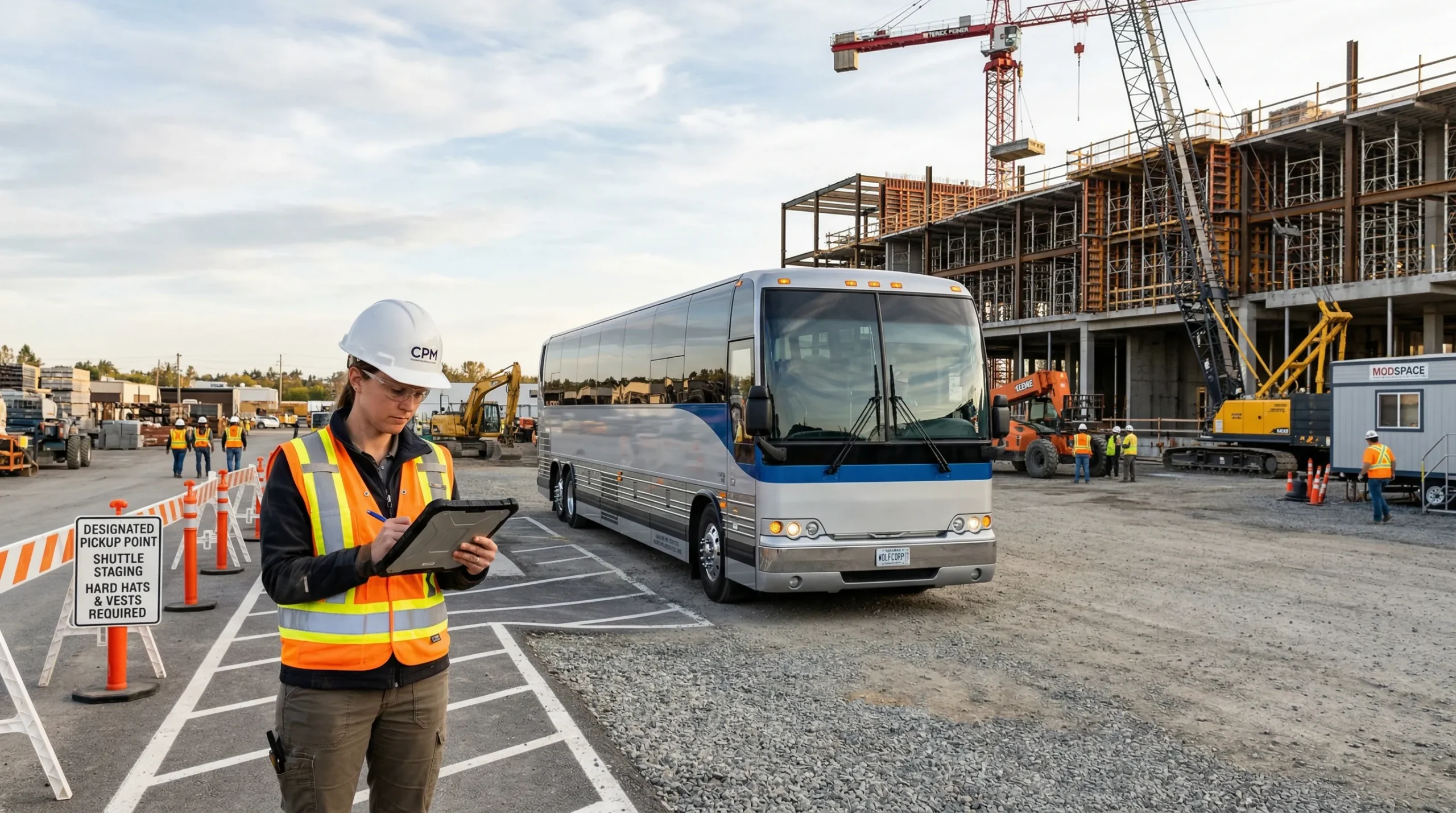
A construction site shuttle bus service is a contracted transportation solution that moves workers between a central pickup point and a job site on a fixed schedule. For large projects with significant headcounts, remote locations, or limited on-site parking, a dedicated shuttle is often the most practical and cost-effective way to get crews on site reliably and on time. If you’re managing a project and evaluating your worker transportation options, here’s a straightforward look at how these services work, what they cost, and what to look for when setting one up.
Why Construction Projects Use Dedicated Shuttle Services
The logistics of moving a large workforce to and from a job site every day are more complicated than they look on paper. Parking is often limited or nonexistent at active construction sites, particularly in urban areas or on large infrastructure projects. Workers traveling independently arrive at different times, which creates staggered start times and reduces the efficiency of morning briefings and shift kickoffs.
A dedicated shuttle solves both problems. Workers park at a central staging area or transit hub and board a vehicle that delivers them to the site at a consistent time. Shifts end the same way. The crew arrives together, leaves together, and the project manager doesn’t spend the first 20 minutes of every morning waiting for stragglers.
There’s also a safety dimension worth noting. Fatigue-related incidents are a documented risk in the construction industry, and workers who drive long distances to remote sites before a physical shift are starting the day already tired. A shuttle lets workers rest during the commute rather than adding driving time to an already demanding workday.
What to Look for in a Construction Site Shuttle Provider
Not every charter bus company is set up to handle the specific demands of a construction shuttle program. Here’s what to look for when evaluating providers:
Schedule flexibility. Construction projects don’t always run standard business hours. Early morning start times, split shifts, and weekend work are common. Your provider needs to be able to match your actual schedule, not a generic 9-to-5 template.
Vehicle capacity and type. The right vehicle depends on your crew size. Minibuses work well for smaller crews of 18 to 35 workers. Full-size motorcoaches handle larger groups of up to 55. For very large projects with multiple crews, multiple vehicles or staggered runs may be necessary.
Route reliability. A shuttle program only works if the vehicle shows up on time, every time. Ask providers about their on-time performance, what happens when a vehicle has a mechanical issue, and whether they have backup vehicles available in their network.
Contracted pricing. Ongoing shuttle programs should be priced on a contracted basis rather than per-trip, which gives you cost predictability over the life of the project. Get clarity on what’s included in the rate and what might trigger additional charges.
Driver professionalism. Workers are your most important asset on any project. The driver representing your transportation program should be professional, punctual, and familiar with the route.
What Construction Site Shuttles Typically Cost
Pricing for a construction site shuttle program depends on several factors: the length of the route, how many runs are needed per day, the size of the vehicle, and how long the program runs.
As a general reference point, a minibus running two daily runs on a moderate-length route might cost anywhere from $400 to $900 per day depending on the market. A full-size motorcoach on a longer route with multiple daily runs would sit higher. Programs contracted over several months often come with better daily rates than shorter-term arrangements.
According to the Bureau of Labor Statistics, the construction industry employs more than 8 million workers in the United States, with large infrastructure and commercial projects often concentrated in areas with limited transit access. More workforce data is available at bls.gov.
For context on how charter bus pricing works more broadly, the guide on the real cost of chartering a school bus covers how vehicle type and trip length affect cost across different use cases.
Setting Up a Construction Shuttle Program: The Practical Steps
Getting a shuttle program running isn’t complicated, but it does require some upfront coordination. Here’s how most project managers approach it:
Define your route and schedule first. Know your pickup location, your site address, your required arrival time, and your shift end time before you contact a provider. The more specific you can be, the more accurate your quote will be.
Estimate your ridership. You don’t need an exact headcount, but a reasonable estimate of how many workers will use the shuttle each day helps determine the right vehicle size. It’s worth building in some flexibility if your crew size is likely to grow during the project.
Decide on your contract length. Most shuttle programs are set up for the duration of a project phase or the full project timeline. Longer commitments often come with better pricing, but make sure the cancellation terms are reasonable given the nature of construction timelines.
Communicate the program to your crew. A shuttle only delivers its full value if workers actually use it. Clear communication about pickup times, locations, and the schedule helps drive adoption from day one.
For projects based in the Pacific Northwest, charter bus rental Seattle options include contracted shuttle programs for construction and industrial worksites. For projects in the Southeast, bus rental Raleigh services cover both short-term and long-term crew transportation needs. North American Charter Bus works with project managers nationally to build transportation programs around specific project requirements.
Common Questions Project Managers Ask
Beyond the basics of cost and scheduling, a few questions come up consistently when project managers are setting up shuttle programs for the first time.
Can the route change if the project moves to a new phase or location? Most providers can accommodate route adjustments with reasonable notice. Build this into your contract discussions upfront rather than assuming it’s automatic.
What happens if ridership drops mid-project? Worker counts on construction projects fluctuate. Discuss how changes in ridership affect your contract and whether there’s flexibility to scale the vehicle size up or down as needed.
Can the shuttle handle tools and equipment? Standard charter buses and minibuses are passenger vehicles. If workers need to transport tools or personal equipment, clarify with the provider what’s permitted on board.
Frequently Asked Questions
A construction site shuttle bus is a contracted transportation service that moves workers between a designated pickup point and a job site on a fixed daily schedule. It’s designed to handle the recurring, route-based transportation needs of large construction crews, particularly on projects with limited parking or remote locations.
Costs vary by market, vehicle size, route length, and number of daily runs. A minibus program on a moderate route might run $400 to $900 per day. Longer contracts and larger programs are typically priced at better daily rates than short-term arrangements.
A minibus works well for crews of 18 to 35 workers. A full-size motorcoach handles up to 55. For larger crews, multiple vehicles or staggered runs are usually the practical solution.
Two to four weeks of lead time is generally enough for most programs, though longer for large or complex routes. Earlier is always better, particularly if your project start date is firm.
Yes. Most professional charter bus providers can accommodate early morning, late night, and weekend schedules. Be specific about your shift times when requesting a quote so the provider can confirm availability.
Ready to Set Up a Shuttle Program for Your Project?
If you’re managing a construction project and need reliable daily crew transportation, getting a quote is the right first step. North American Charter Bus works with project managers across the country to build shuttle programs that fit specific project timelines, crew sizes, and route requirements.