
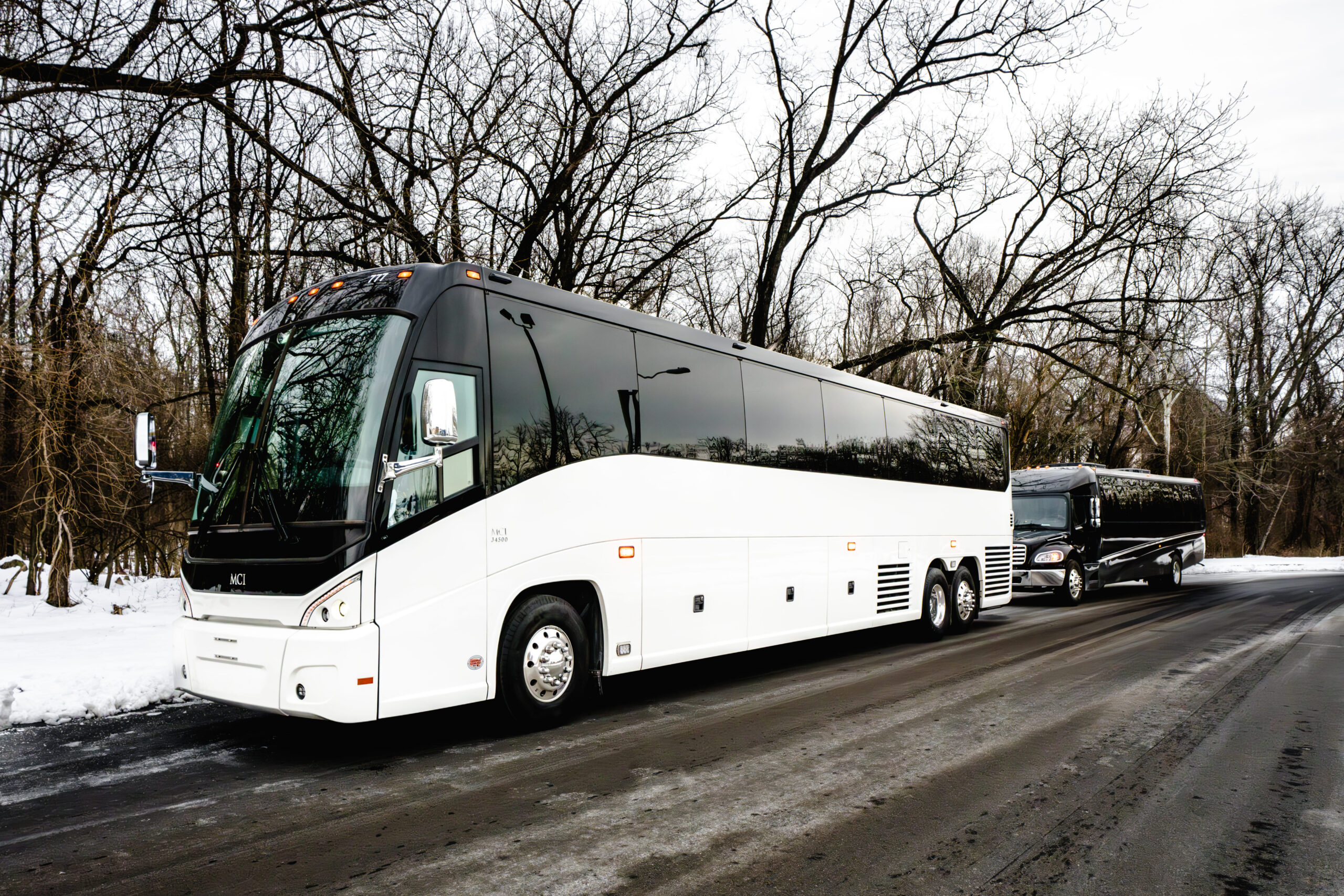
A charter bus is a motorcoach reserved for the private use of a single group. You hire the vehicle and a professional driver for a defined trip, and nobody outside your party rides along. That last point is what separates it from public transit, a scheduled intercity line, or splitting your group across a fleet of rental cars.
Most of the questions people ask before booking come down to four things: what the vehicle is, how many people it holds, what it costs, and whether a bus is even the right call. This guide answers those in order, with the numbers we actually publish and the judgment calls that do not show up on a price sheet.
Key Takeaways at a Glance
-
01
Exclusive Use
A charter bus is a private motorcoach hired for one group's exclusive use, with a professional driver, not a shared or scheduled service.
-
02
Capacity Range
A standard full-size coach seats 56, though the honest working range is about 47 to 60 depending on legroom and layout.
-
03
The Fleet Ladder
The full vehicle ladder runs from a 14-passenger Sprinter van up through minibuses to the 56-passenger coach, so the right size is rarely the biggest one available.
-
04
Published Rates
Published rates run roughly $500 to $700 for a short local minibus job and $1,800 to $2,450 for a full-day coach, with distance, duration, group size, season, and amenities driving the number.
-
05
Common Mistake
The most common booking mistake is choosing by headcount alone and ignoring luggage, road access, and trip length.
-
06
Trip Management
A single point of contact who manages the whole trip matters more than any single amenity when something changes mid-route.
What is a charter bus, exactly?
A charter bus is a motorcoach rented for the private use of a group, driven by a licensed professional, for a trip you define. You set the pickup, the stops, and the drop-off. The bus goes where you send it and waits when you need it to wait.
That is different from a city bus or a scheduled coach line, where you buy a seat on a fixed route with strangers. It is also different from the do-it-yourself alternatives most groups weigh first: renting several cars, booking a number of rideshares, or asking people to drive themselves and meet at the destination. Those options split the group, scatter the arrival times, and put the logistics on your shoulders. A charter bus keeps everyone together, on one schedule, under one driver.
People use the terms motorcoach, charter bus, and coach bus interchangeably, and that is fine. In practice they all point to the same thing: a large, over-the-road passenger vehicle built for comfortable group travel either in-city or over distance.
Share of Bookings
Who actually rents charter buses?
Business is the largest slice by a wide margin. Across our own bookings, corporate groups account for 46 percent of the total, more than every other category combined. Schools and universities are a distant second, and the rest of the demand spreads across weddings, private events, non-profits, faith groups, and more.
The pattern is worth reading for what it tells you about the vehicle you probably need. Corporate work, from company events to shift shuttles, tends toward day trips and multi-stop logistics rather than cross-country hauls, which is why the mid-size and full-size coach do most of the heavy lifting. School and university trips cluster around the academic calendar and book in waves. The point is not that any one group is more important; it is that the trip type, not the label on the group, drives the right vehicle and the right price.
What does a charter bus look like, inside and out?

Exterior Specs & Storage
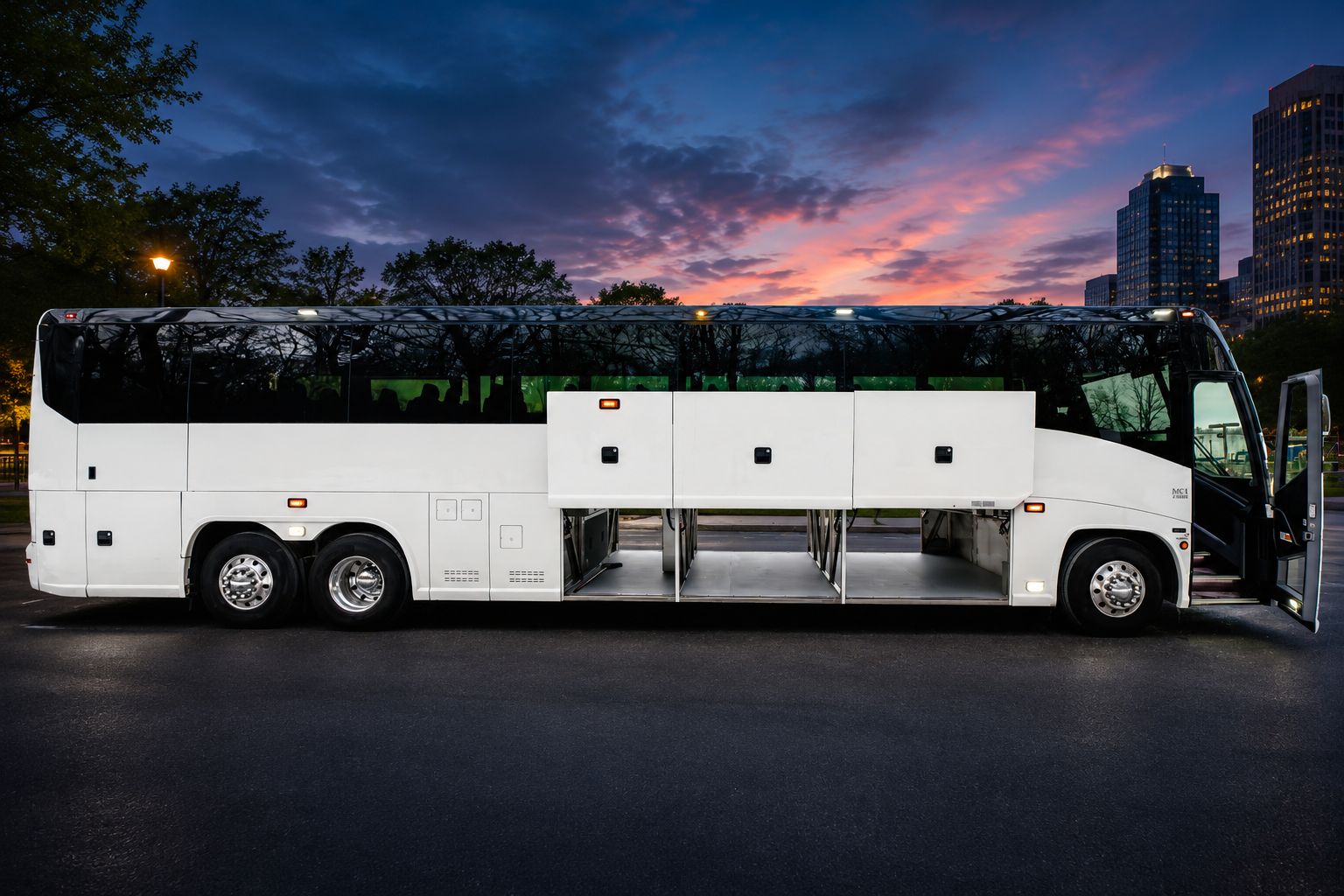
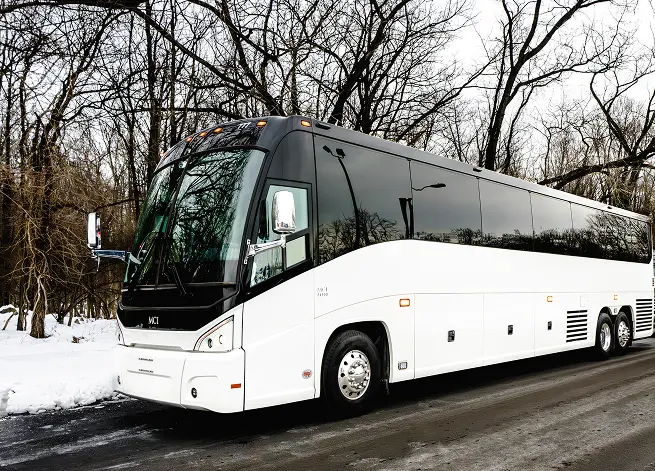
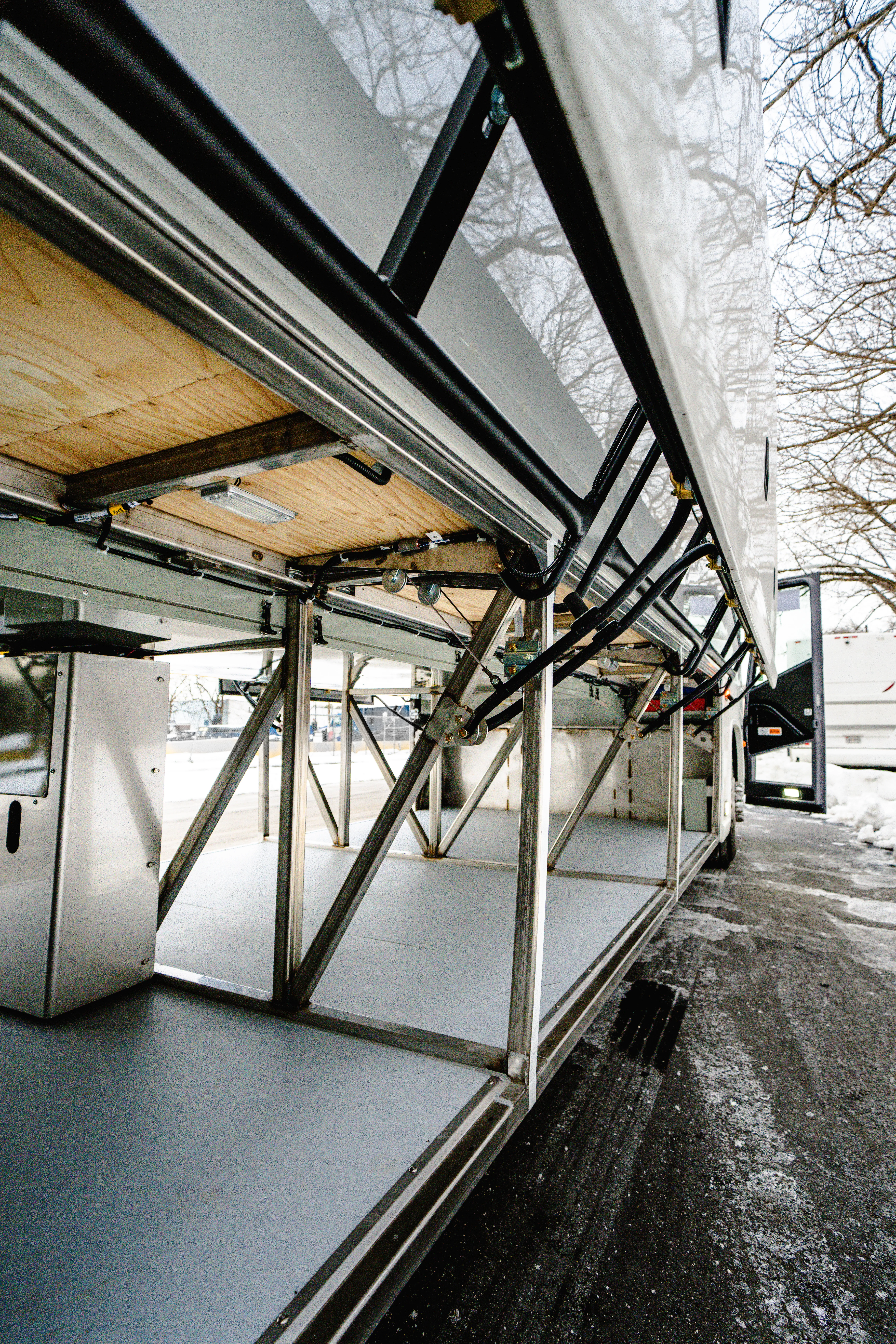
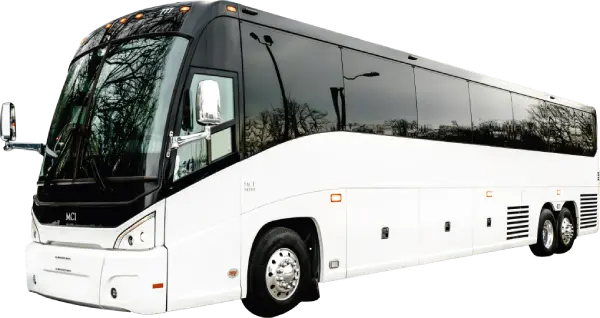
From the outside, a full-size charter bus is a single-deck highway coach, 45 feet long, about 8 and a half feet wide, and roughly 11 to 12 feet tall. Underneath the passenger floor sit large luggage bays, the deep compartments a driver loads suitcases into from the side. On a standard coach that storage runs into the hundreds of cubic feet, enough for roughly one checked-size bag per passenger below deck and a carry-on in the overhead bins above.

Interior Cabin & Amenities
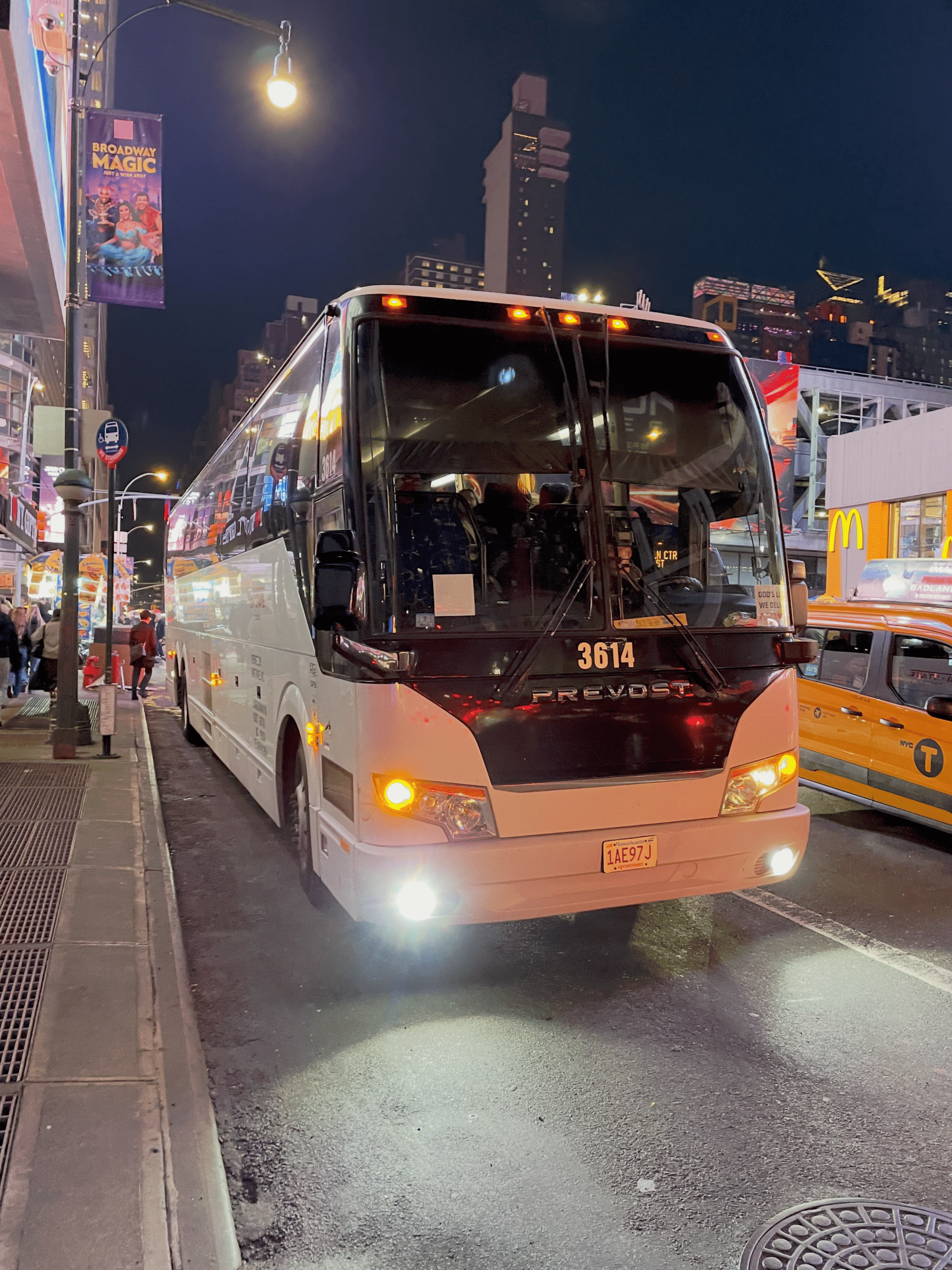
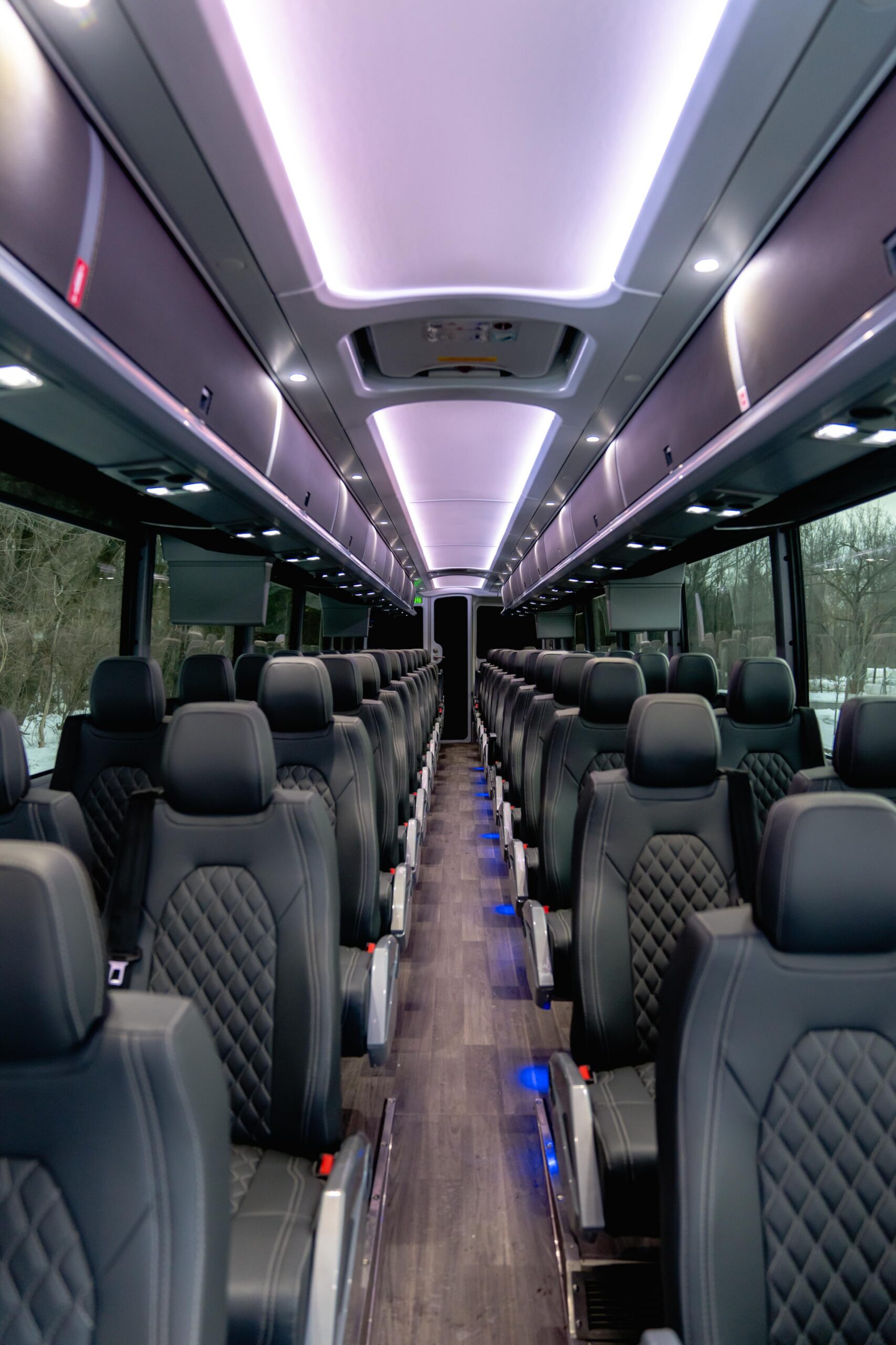
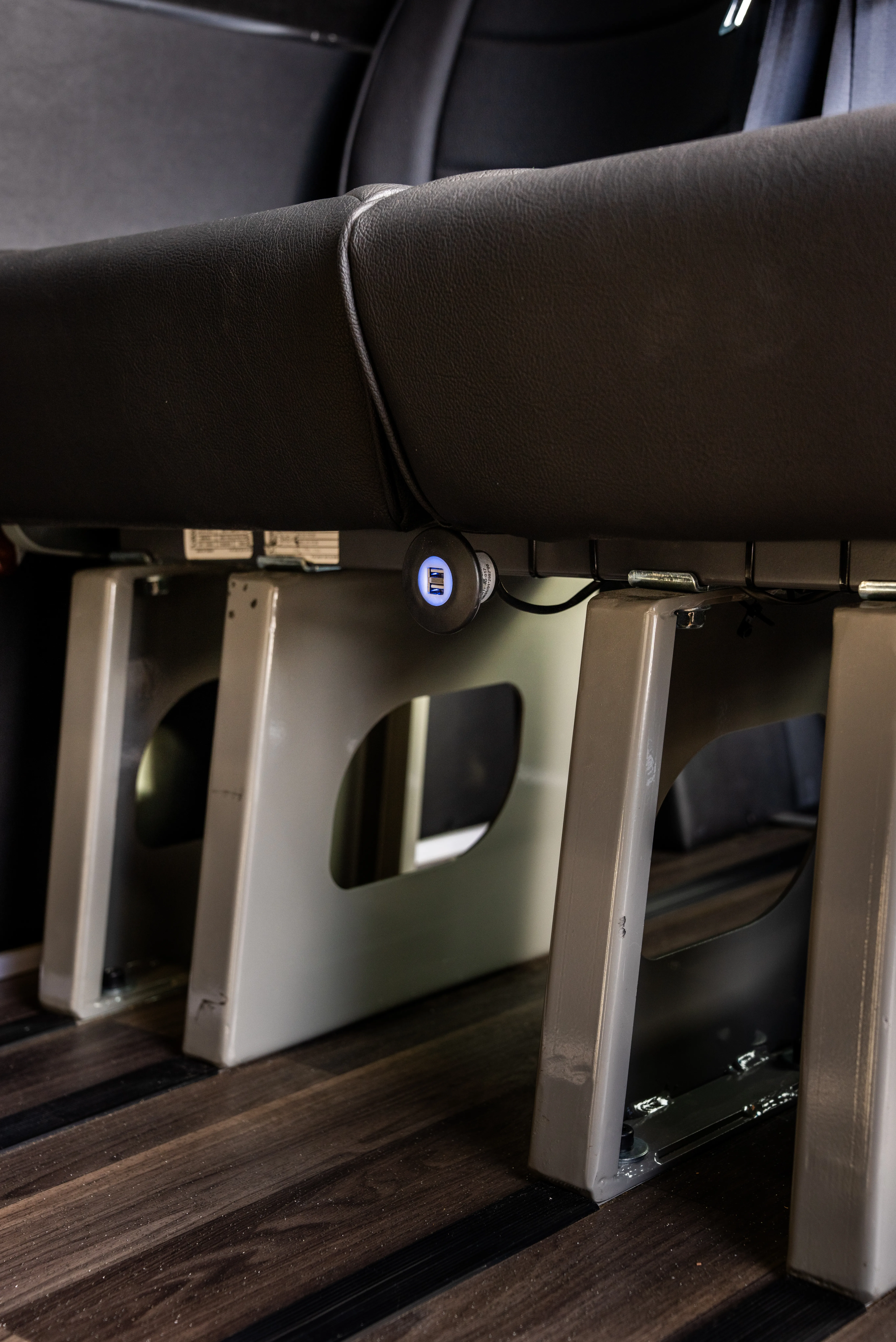
Inside, a modern coach reads more like a domestic flight than a school bus. You get forward-facing reclining seats with real legroom, fabric or leather upholstery, high ceilings, wide aisles, and large panoramic windows. Most coaches carry climate control with personal air vents, a rear restroom with a holding tank, and increasingly WiFi, AC power outlets, and USB charging at the seats. Many add overhead screens or a PA system for guides and presentations. Our own rundown of what to expect is in the charter bus features guide, and it is worth reading before you assume every bus is identical, because they are not.
One honest caveat: Amenities vary by vehicle and by market. WiFi and a restroom are common on full-size coaches and rare on small minibuses. Always confirm the specific features on the specific bus assigned to your trip rather than the category in general.
Standard Cabin Amenities Included
-
Reclining Seats
-
Climate Control
-
Onboard Restroom
-
Power Outlets & USB
-
WiFi Connectivity
-
Luggage Storage
Planning a trip and want a straight answer on vehicle and price? Contact us for an immediate quote. Tell us the group size, dates, and route, and we will come back with the right vehicle rather than the biggest one.
How many people does a charter bus seat?
A standard full-size charter bus seats 56 passengers. The real-world range is about 47 to 60: layouts built for extra legroom drop into the high 40s and low 50s, while a maximum-density floor plan can reach 60. But the coach is only the top of a ladder, and most groups do not need the top rung.
Here is the working lineup and where each vehicle fits.
-
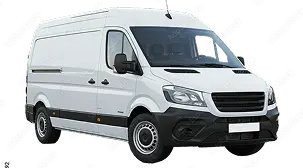
Sprinter van (14 passengers)
Small executive groups, airport runs
-
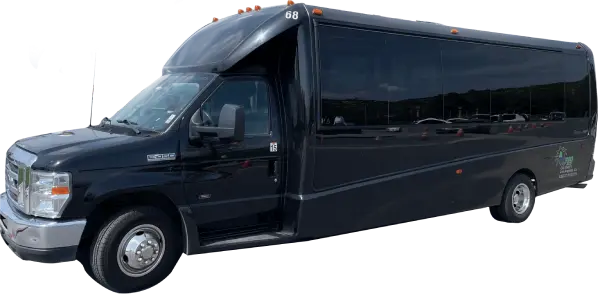
Minibus (18 to 28 passengers)
Local shuttles, wedding guests, short outings
-
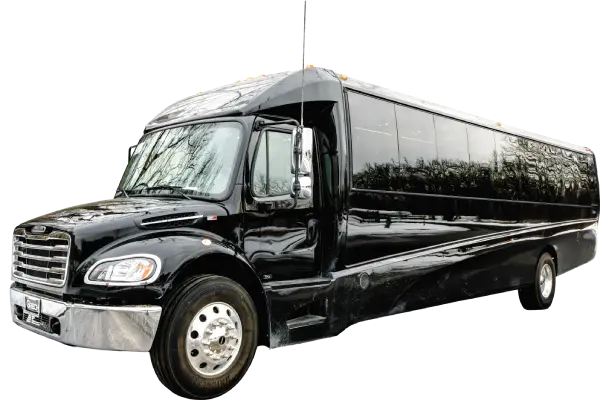
Mid-size charter bus (30 to 40 passengers)
Mid-size teams, day trips
-
Full-size charter bus (56 passengers)
Large groups, long-distance travel
-
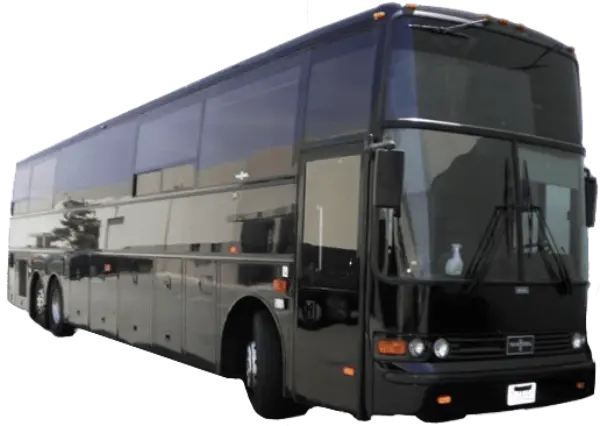
Executive / deluxe coach (Varies)
Corporate travel with upgraded interiors
-
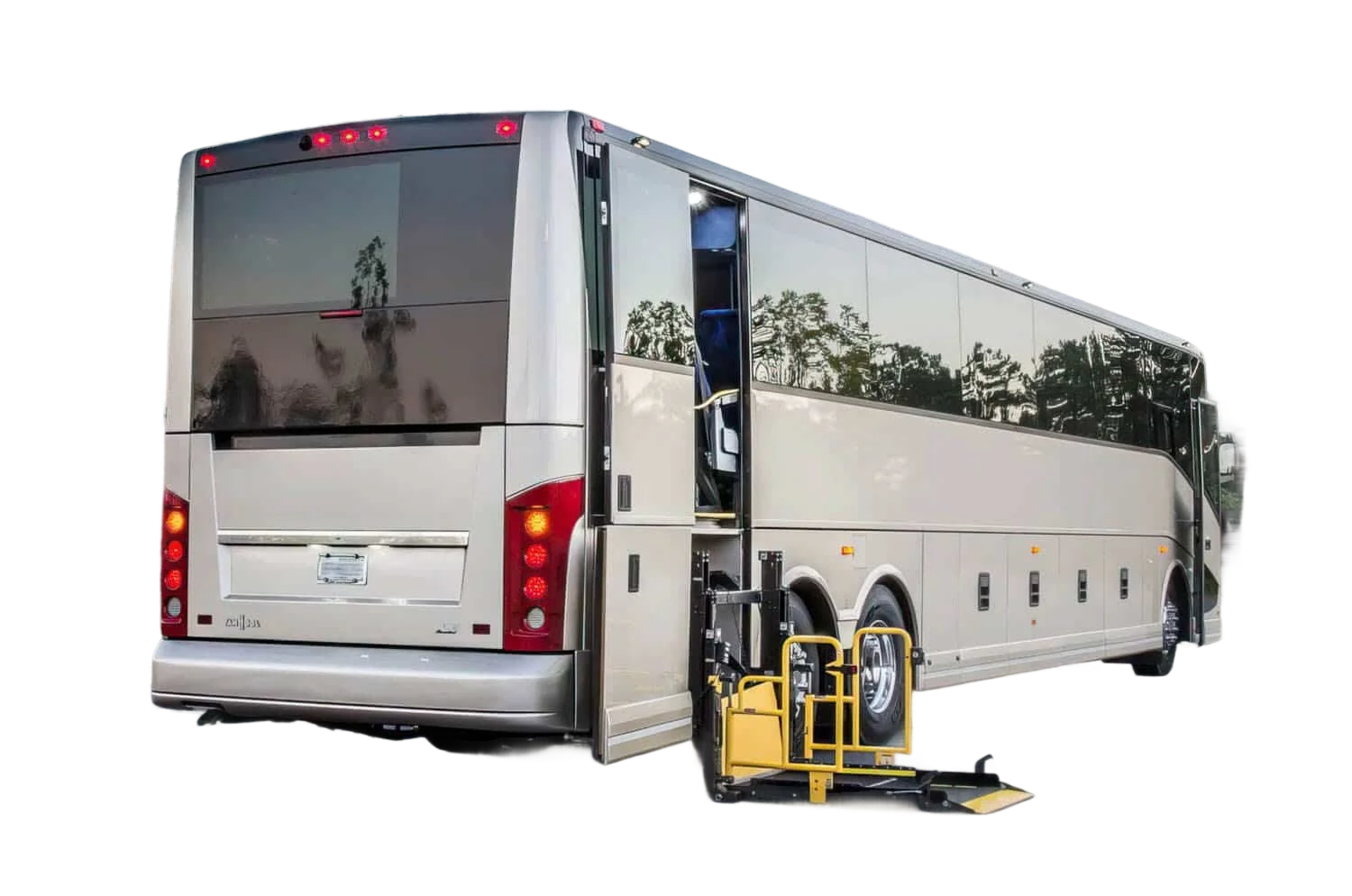
ADA wheelchair-accessible coach (Varies)
Groups needing lift or ramp access
The mistake we see most often is renting by headcount alone. There are two problems with this. First, luggage. A group of 20 fits easily on a 25-passenger minibus, but if every one of them is carrying a rolling bag and a weekend of gear, your real constraint is the luggage bay, not the seats. Second, access. The 56-passenger coach getting into a narrow hotel drive or a tight downtown loading zone is sometimes impossible; a 28-passenger minibus does the job the coach physically cannot. Bigger is not automatically better. If you are genuinely between two sizes, our minibus versus charter bus breakdown walks through the trade-off in detail.
What amenities come on a charter bus?
The common ones on a full-size coach are a restroom, WiFi, power outlets, climate control, reclining seats, and overhead storage, with screens and a PA system on many vehicles. Accessibility features, including wheelchair lifts or ramps, are available on ADA-equipped coaches and should be requested when you book, not assumed.
Here is a call that runs against the standard upsell: you do not always need a restroom coach. For a trip under about three hours with one planned stop, a minibus without a lavatory is usually cheaper, rides just as well, and saves you some money if your passenger count is in the teens or 20’s. Pay for the restroom when the route and duration justify it. On a cross-state trip or a schedule with no obvious places to stop, it earns its keep. On a 90-minute shuttle between a hotel and a venue, it is often money spent on a feature nobody uses.
How much does it cost to rent a charter bus?
Cost depends on five things: distance, trip duration, group size, time of year, and the amenities you choose. Rather than a single misleading number, our pricing page publishes realistic scenario ranges, and they are a better planning tool than a per-mile rate because charter pricing rarely reduces to one clean figure.
-
Trip typeVehicleDurationEstimated range
-
Short-distance event shuttleMinibus4 hours$500 to $700
-
Corporate team outingCoach bus1 day (about 10 hours)$1,800 to $2,450
-
School field tripSchool bus1 day$850 to $1,300
-
Weekend getawayCoach bus2 days$3,500 to $4,800
-
Long-distance travelCoach bus1 week$6,000 to $10,500
Treat these as estimates, not quotes. Your actual price moves with your dates, your route, and demand in your market. Two things reliably push a number up: peak season, roughly late spring through early fall and around major holidays, and any itinerary that keeps a driver on the clock past regulated hours-of-service limits, which can require a second driver or an overnight. If a rate looks far below these ranges, ask what is not included before you celebrate. The honest work of pricing a charter is putting every real cost on the table up front.
When should you rent a charter bus instead of cars or transit?
Rent a charter bus when keeping the group together, on one schedule, is worth more than the potential savings of having everyone arrange their own transportation. That is the whole decision in one sentence, and it is usually true for weddings, corporate events, sports teams, school trips, and any airport transfer where a dozen or more people need to arrive at the same place at the same time.
The math tends to favor a bus once you cross roughly 15 to 20 people. Below that, a couple of vans or a Sprinter often wins. Above it, the per-person cost of a single coach usually beats the combined bill for rideshares or multiple rental cars, and it removes the parking, the loss of some cars at the first exit, and the stragglers who arrive 40 minutes late. For companies weighing a daily commute program specifically, we ran the numbers in our employee shuttle versus rideshare comparison.
The Charter Coach Advantage
- Synchronized Arrivals: Entire group reaches destinations at the exact same minute.
- No Logistics Stress: Passengers work, sleep, or relax while a driver handles city traffic.
- Lower Per-Head Bill: Usually cheaper than multiple car rentals, tolls, and valet bills combined.
- Secure Luggage: Massive compartments hold items out of aisle paths.
The Self-Drive Caravan Cons
- Delayed Schedules: Stragglers miss exits, get lost, or search for downtown parking.
- Driving Fatigue: Team members are exhausted from managing routes and traffic.
- Disorganized Logistics: Multiple expense receipts, car rental pickup waits, and parking fees.
- No Storage Room: Luggage takes up passenger legroom inside standard trunks.
Where a bus is the wrong tool: very small groups, trips where people need to peel off independently throughout the day, and routes into places a coach simply cannot go. It’s important to match the vehicle to the job. The point of hiring a professional is to get that judgment before the trip, and not discover it on the day you need it.
How do you actually book a charter bus?
You book by giving a provider four things: your group size, your dates, your route with all stops, and any special needs like accessibility or a restroom. From there you get a vehicle recommendation and a quote, you confirm with a deposit, and the provider handles the driver, the routing, and the day-of logistics.
Book earlier than you think, especially for peak season, graduation weekends, and holidays, when quality vehicles and experienced drivers get reserved weeks out. The value of working with a single point of contact who owns your trip from first inquiry to final drop-off shows up exactly when something changes: a flight lands late, an agenda shifts, weather reroutes you. The last thing you need is your group standing on a curb. Whether it is a wedding shuttle, a corporate event, or a sports team trip, the vehicle is only half of what you are paying for. The management is the other half. North American Charter Bus is here for you.
Ready to Plan Your Group Trip?
Submit your dates, headcount, and route stops. We will customize your vehicle package rather than recommending the most expensive size.

Frequently Asked Questions
A standard full-size charter bus seats 56 passengers, with a real range of about 47 to 60 depending on legroom and layout. Smaller options include Sprinter vans at 14 and minibuses from 18 to 28. If you are between sizes, factor in luggage and road access, not just headcount, and see our minibus versus charter bus guide.
Full-size coaches commonly include a rear restroom, WiFi, power outlets, and climate control, but amenities vary by vehicle and market. Small minibuses often have neither a restroom nor WiFi. Always confirm the exact features on the specific bus assigned to your trip rather than assuming the category standard.
A full day of about 10 hours on a coach bus runs roughly $1,800 to $2,450 as a published estimate, while a shorter local minibus job runs closer to $500 to $700. Your real price depends on distance, duration, group size, season, and amenities. See current ranges on our pricing page.
Book as early as you can, and treat peak season and holiday weekends as the times to reserve weeks ahead. Our clients on average book 4-5 months in advance. Good vehicles and experienced drivers get committed early, so a late request narrows your options and can raise the price. For a fast, specific answer, request a quote with your dates and route.
Both are private, driver-operated vehicles for group travel; the difference is size and amenities. A charter bus is a full-size coach seating up to about 56 with features like a restroom and larger luggage bays, while a minibus typically seats 18 to 28 and is better for shorter local trips and tight access. The right choice depends on group size, luggage, and route.