
Group Transportation for Corporate Events: How to Plan Logistics for Large Teams
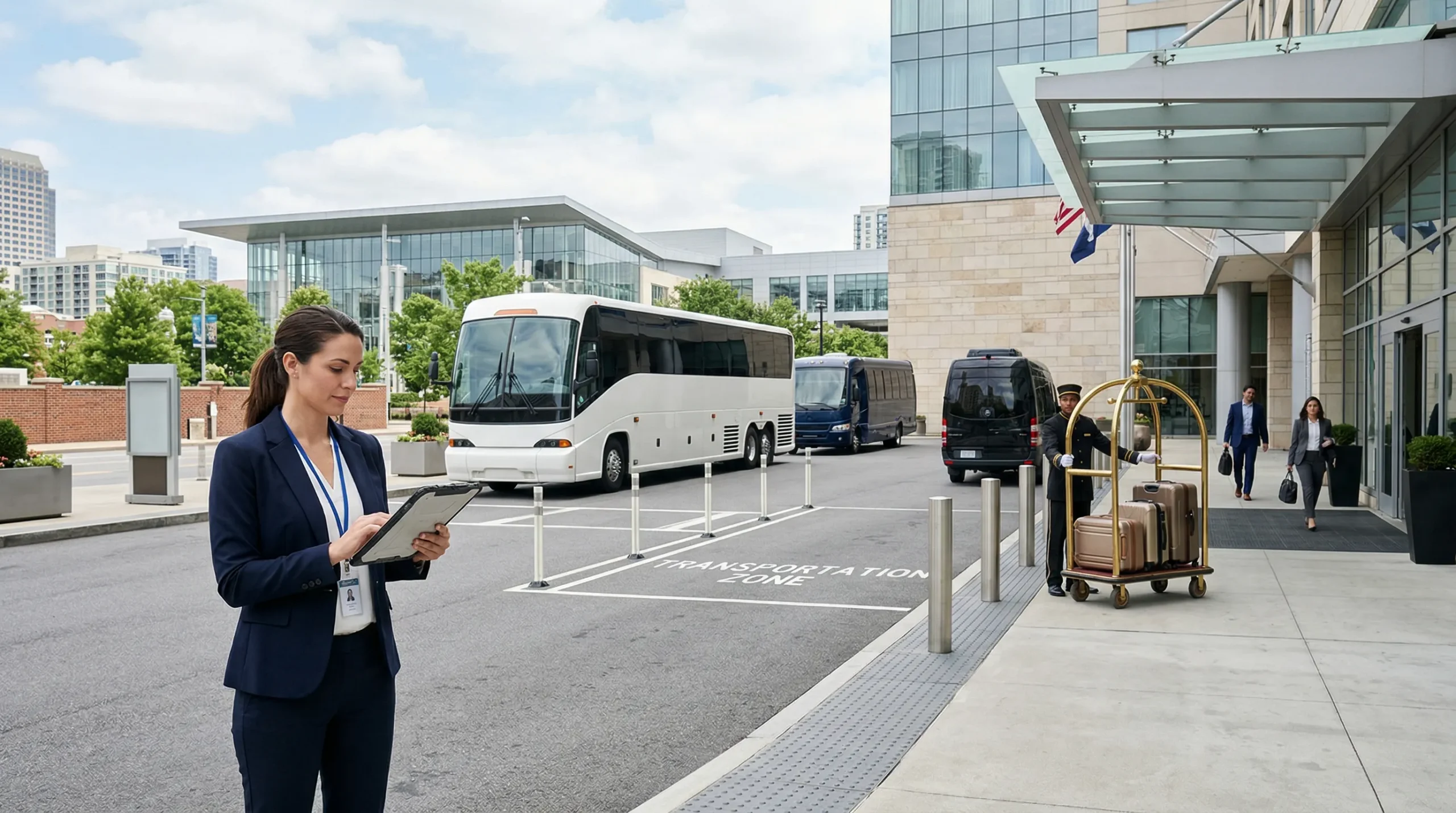
Planning group transportation for a corporate event means coordinating vehicles, schedules, routes, and headcounts across a moving set of variables while everything else about the event is also in motion. For large teams, the stakes are real. A transportation plan that works on paper but falls apart on the day creates delays, frustration, and a poor attendee experience that colors how people remember the event overall. The good news is that most transportation problems are preventable with the right planning process. Here’s how to approach it.
Start With the Full Picture Before You Book Anything
The most common mistake event planners make with group transportation is booking vehicles before they fully understand what the transportation program needs to do. A vehicle count and a date are not a transportation plan. Before you contact a single provider, map out the complete picture.
That means identifying every movement your attendees need to make during the event. Airport arrivals and departures, hotel to venue transfers, venue to dinner location shuttles, offsite activity runs, and end-of-night returns all need to be accounted for separately. Each movement has its own timing, its own headcount, and potentially its own vehicle requirement.
It also means understanding your attendee profile. A conference where most people are flying in from out of town has very different transportation needs than a corporate retreat where most attendees are local. Knowing where your people are coming from shapes every decision about vehicle type, timing, and route structure.
How to Build a Transportation Schedule That Actually Holds
Once you have the full picture, the next step is building a schedule that can absorb the inevitable variability of a real event without falling apart.
The key principle here is buffer time. Flight delays, sessions that run long, and slower-than-expected venue loading are all predictable occurrences that an inflexible schedule can’t handle. Build 15 to 20 minutes of buffer into every transfer, particularly airport pickups where arrival times are genuinely uncertain.
It also helps to think about your transfers in waves rather than as single departure events. For a conference with 300 attendees checking out of a hotel on the final morning, a single motorcoach making repeated loops is usually more practical than trying to move everyone simultaneously. Staggered departures reduce crowding, give the driver manageable loads, and keep the operation running smoothly even if one wave runs a few minutes behind.
For groups traveling to or from airports, the guide on booking charter buses for sports teams offers useful practical context on managing group departures and arrivals that applies equally well to corporate travel.
Matching Vehicles to the Specific Needs of Each Transfer
Not every transfer in your event program requires the same vehicle, and trying to use one vehicle type for everything often means paying for capacity you don’t need or using a vehicle that isn’t the right fit for a particular route.
Here’s a practical framework for matching vehicles to transfers:
Large group transfers between fixed locations. A full-size motorcoach seating up to 55 passengers is the right choice for moving large groups between a hotel and a main conference venue, or from a venue to a group dinner. It’s cost-efficient per passenger and straightforward to manage.
Smaller breakout or VIP transfers. A minibus seating 18 to 35 is well suited for smaller sub-groups, executive transfers, or routes where a full motorcoach would be oversized. For events with multiple simultaneous transfers happening at different times, a mix of motorcoaches and minibuses often works better than a uniform fleet.
Multi-stop or city tour transfers. If your event includes an offsite activity, a city tour, or a networking event at a venue that requires navigating urban streets, a minibus offers better maneuverability than a full motorcoach and is easier to park at locations that weren’t designed with large vehicles in mind.
Managing Headcount Variability
One of the trickiest parts of corporate event transportation planning is that your headcount is rarely fixed until very close to the event date, and even confirmed attendees don’t always show up as expected.
The practical approach is to plan for a realistic attendance range rather than a single number. If you’re expecting 150 confirmed attendees for a venue transfer, plan your vehicle capacity for 120 to 130 people actually using the shuttle. Most events see a percentage of attendees make their own arrangements, arrive late, or leave early. Over-provisioning on vehicles for every transfer gets expensive quickly.
That said, under-provisioning is the bigger risk. Running out of space on a shuttle and leaving attendees behind is a much worse outcome than having a few empty seats. Build a small buffer into your vehicle capacity and make sure your provider knows you may need to make minor adjustments close to the event date.
According to the Professional Convention Management Association, large corporate meetings in the United States average more than 400 attendees, with transportation and ground logistics consistently cited as one of the top operational challenges for event organizers. More data is available at pcma.org.
Communicating the Transportation Plan to Attendees
A well-designed transportation program only delivers its full value if attendees actually know how to use it. Poor communication about shuttle schedules is one of the most consistent sources of attendee frustration at corporate events, and it’s entirely preventable.
At minimum, attendees should receive a clear summary of the shuttle schedule at least 48 hours before the event. That summary should include pickup locations with specific addresses, departure times for each run, and a contact number for transportation-related questions on the day.
For multi-day events, a daily transportation update pushed through your event app or via email keeps attendees oriented as the schedule evolves. It also reduces the volume of questions your on-site team has to field about when the next shuttle departs.
On the day itself, clear signage at pickup locations matters more than most planners anticipate. Attendees arriving at an unfamiliar hotel or venue shouldn’t have to ask three people where to find the shuttle. A well-placed sign at the lobby exit solves that problem completely.
Working With a Network-Based Provider for Large Events
For corporate events requiring multiple vehicles across several days, working with a network-based charter bus provider rather than a single local operator offers some meaningful practical advantages.
A provider with access to a broad carrier network can source multiple vehicle types simultaneously, cover backup needs if a vehicle has a mechanical issue, and coordinate transportation across multiple cities if your event involves travel between locations. For national conferences or multi-city corporate programs, this kind of coordination through a single provider relationship simplifies the logistics considerably.
For events in the Southeast, bus rental Raleigh services cover multi-vehicle corporate programs across the region. For events on the West Coast, charter bus rental Seattle options include full conference transportation programs with multiple vehicle types. North American Charter Bus coordinates group transportation for corporate events nationally across a vetted network of professional carriers.
Frequently Asked Questions
Start with your expected attendance and the size of each transfer. Divide your realistic shuttle ridership by the capacity of your chosen vehicle, then add a small buffer. For example, if 120 people need a hotel-to-venue transfer and you’re using 55-passenger motorcoaches, two coaches gives you capacity for all of them with room to spare.
For most corporate events, yes. A single provider relationship simplifies communication, gives you one point of contact for the day, and often results in better pricing on multi-vehicle bookings than sourcing vehicles from separate companies.
Build a contingency plan into your transportation brief. This might mean a later shuttle run, a rideshare allowance for stragglers, or a designated on-site contact who can arrange alternatives. Having a plan in place before the event prevents scrambling on the day.
Provide your full event schedule, all pickup and drop-off addresses, estimated headcounts for each transfer, any accessibility requirements, and a day-of contact number. The more detail you give upfront, the smoother the operation runs.
Most providers price by the vehicle per day or per hour depending on the structure of your program. Multi-day bookings often come with better daily rates than single-day arrangements. Get a full program quote rather than pricing each day separately for the most accurate comparison.
Ready to Start Planning?
If you’re coordinating group transportation for an upcoming corporate event, the earlier you start the better. North American Charter Bus works with event planners and corporate teams nationally to build transportation programs that fit the specific logistics of each event.